Storm Damage: Why Board Up Comes Before Repairs
When a Valley wind event takes back part of a roof or puts a branch through a window, the building has a hole in it. Everything that happens next is decided by how fast that hole gets closed — and by whether you photographed it before it did.
This is the sequence, and it is not the one most people expect. Repairs are last, not first.
The first 48 hours, in order
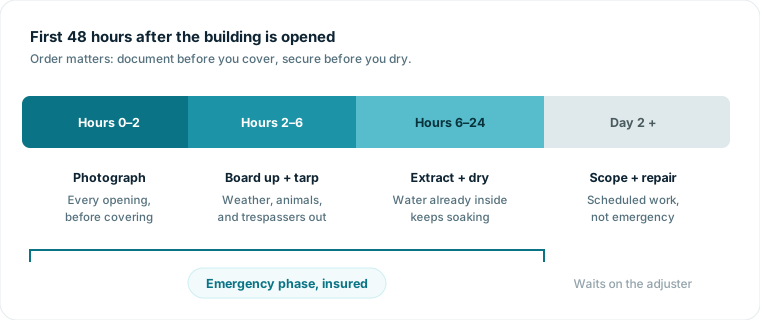
Hours 0–2: photograph before you cover anything
Once plywood goes over the opening, the evidence of what happened is underneath it. Take more photos than feels necessary: the opening from outside and inside, the debris, the water path, anything already damaged, and a wide shot that shows where on the building it is.
This is the cheapest two minutes in the whole process and the one people skip.
Hours 2–6: board up and tarp
An open building is an invitation — to the next rain band, to animals, and to anyone walking past. Emergency board up closes window and door openings with plywood and fasteners; roof damage gets tarped or shrink-wrapped.
Two things make this urgent rather than optional. Valley storms arrive in sequences, not single events — the atmospheric river pattern means the next system is often 24 to 48 hours behind the one that just did the damage. And an unsecured building is a liability exposure of its own.
Hours 6–24: extract and dry
Water that came in during the storm is still in the structure, and it does not care that the hole is now closed. Extraction and drying run on the same clock as any other water loss: the 48-hour mold window starts when the material got wet, not when you got around to it.
Day 2 onward: scope and repair
Now it is construction — roofing, framing, drywall, paint. This phase moves at the speed of adjusters, materials, and scheduling rather than urgency, and it can run weeks. That is normal and it is not the emergency.
Why insurance expects you to secure it
Nearly every homeowners policy contains a duty to protect the property from further damage after a covered loss. In plain terms: you are expected to take reasonable steps to stop it getting worse, and emergency board up and tarping are the textbook example.
Two practical consequences:
- Emergency mitigation is normally covered, and often paid separately from the repair scope. Keep the invoice.
- Damage that happened because you waited is where carriers push back. If the roof was open for a week and three storms came through, the argument about what the first storm actually caused gets difficult.
This is the same logic that governs water losses generally — mitigate first, argue about scope later. The California insurance guide covers how that plays out on a claim.
What actually fails in Valley storms
The damage here has a pattern, and it is mostly wind and water finding existing weak points rather than dramatic structural failure.
- Wind-driven rain into roof penetrations. Vents, flashing, and skylights that never leak in calm weather leak sideways in an Altamont wind event. Tracy sees this more than anywhere else in the region.
- Torn-back roofing. Older composition shingle lifts at the edges and peels; once a section is gone, the deck is exposed.
- Tree limbs. Mature trees in the older neighborhoods of Stockton, Lodi, and Modesto drop limbs onto roofs and through windows.
- Fence and outbuilding debris becoming projectiles in sustained wind.
- Overwhelmed drainage pushing water toward garages and doorways in flat, low-lying areas — this is the one that overlaps with flood damage cleanup.
Board up is not only a storm service
The same call handles a few situations people do not associate with it:
- After a fire. Crews cut roofs and walls open to reach hot spots, which leaves the building wide open once they leave. Board up and the smoke and soot work are usually the same dispatch.
- After a break-in, where a door or window is gone and the property needs securing tonight.
- Vacant or commercial property that has been opened and cannot be left that way.
What to do if it is happening now
If the wind is still up or there is active water intrusion, stay out of the affected area — a compromised roof or ceiling is a structural risk, and standing water near electrical is a shock risk. Do not climb onto a wet or damaged roof to tarp it yourself; that is the single most common way a property loss turns into an injury.
From the ground: photograph what you safely can, move what you can out of the water path, and call. Dispatch runs 24 hours, and board up is treated as an emergency because the clock on the next storm is already running.
The short version
Photograph, secure, dry, then repair — in that order. Your policy expects you to secure it, and the cost of doing so is normally covered. The mistake that gets expensive is leaving a building open through the next system.
Storm and roof leak response and 24 hour board up are dispatched across San Joaquin and Stanislaus Counties, day or night.